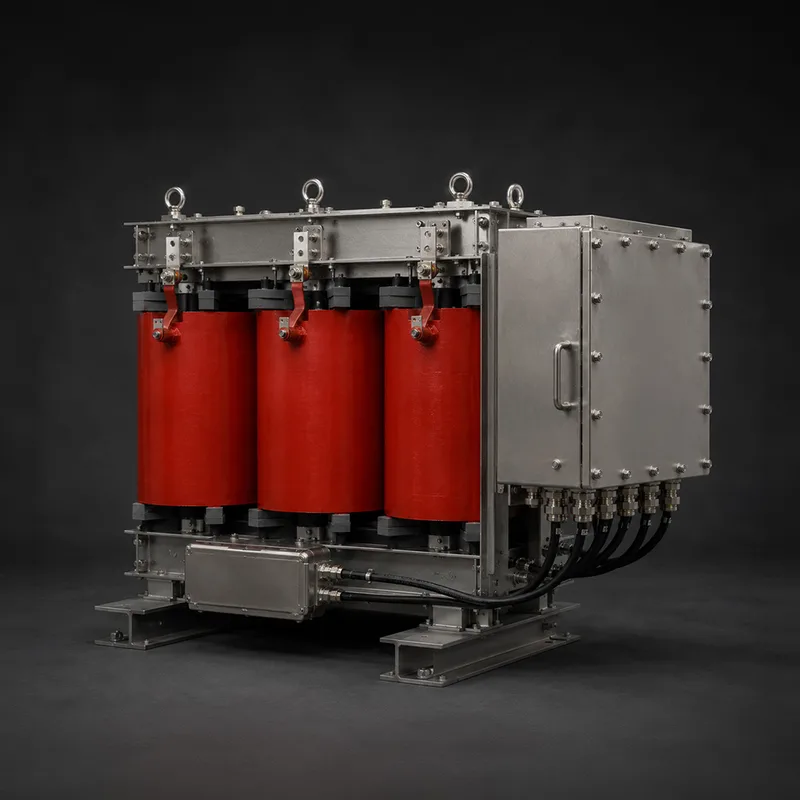
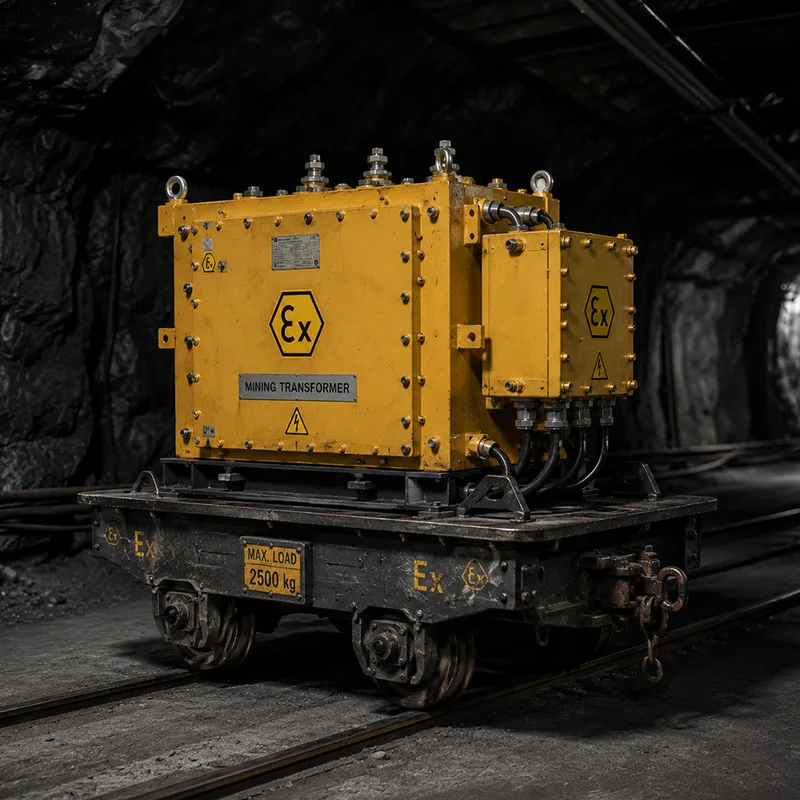
Hazardous Area (ATEX / IECEx) Transformers
Engineered-to-Order Transformer Solutions for Explosive Atmospheres
- Home
- Hazardous Area (ATEX / IECEx) Transformers
Certified and Safe Power Solutions for Explosive Environments
Electrical equipment used in environments containing explosive gases or dust must be engineered according to principles fundamentally different from standard industrial designs. In such applications, safety is not a feature — it is a requirement.
ESTA designs and manufactures transformer solutions compliant with ATEX and IECEx requirements.
Our engineering approach focuses on eliminating ignition risks, ensuring operational safety, and providing long-term reliability.
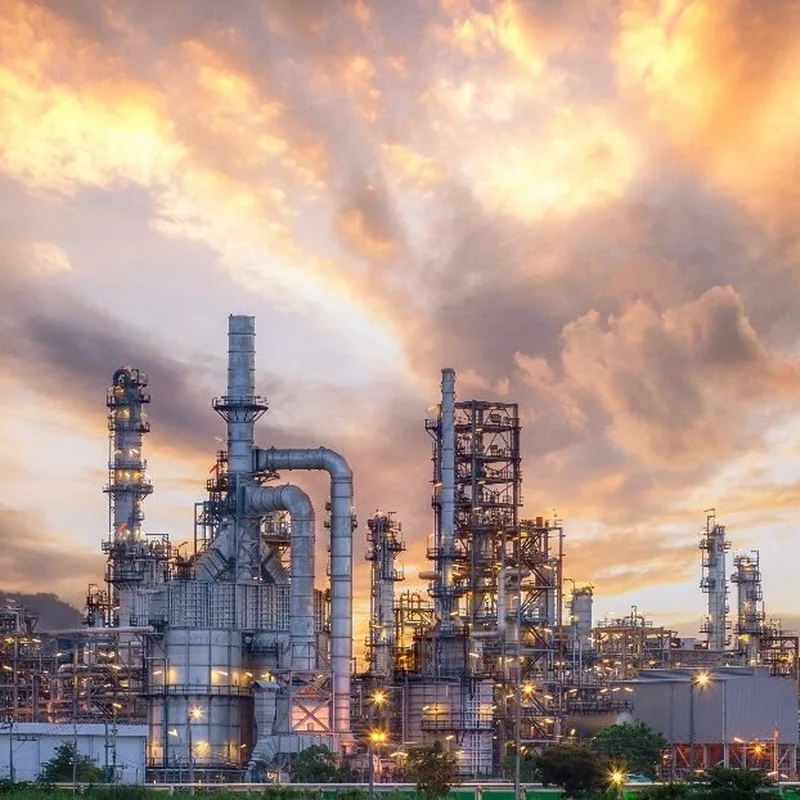
Application Areas
ESTA hazardous area transformer solutions are used in the following applications:

Oil & gas facilities

Refineries

Chemical and petrochemical plants

Offshore platforms

Underground mining

Paint and solvent production facilities
What Are ATEX and IECEx?
ATEX
The European Union Directive 2014/34/EU governing equipment intended for use in potentially explosive atmospheres.
IECEx
The international certification system for equipment used in explosive environments.
ESTA products are designed and manufactured in compliance with ATEX and IECEx according to project requirements.
Zone Classification
Hazardous areas are classified based on risk level:
- Zone 0 / 20 – Continuous explosive atmosphere
- Zone 1 / 21 – Explosive atmosphere likely during normal operation
- Zone 2 / 22 – Explosive atmosphere unlikely, occurring only under abnormal conditions
Transformer design is determined according to the installation zone.
Product Groups
For ATEX / IECEx hazardous area applications, ESTA provides the following product groups:

+90 534 988 92 82
Engineering & Manufacturing Approach
- Flameproof enclosure engineering
- Pressure containment and sealing design
- Surface temperature control
- Magnetic and thermal analysis
- Certification-compliant documentation
Each project is evaluated individually according to applicable technical specifications.
Standards & Certification
- ATEX 2014/34/EU
- IECEx Certification System
- IEC 60076
- EN 60079 series
Manufacturing, quality control, and testing processes are conducted in accordance with certification requirements.
Gas and Dust Groups
- IIA
- IIB
- IIC (Highest risk category)
Dust groups and temperature classes (T1–T6) are evaluated according to project specifications.
Product Scope
ESTA manufactures transformers in the following protection concepts:
- Explosion-Proof (Ex d)
- Increased Safety (Ex e)
- Pressurized (Ex p)
- ATEX Cast Resin
- Mining Group I (M1 / M2)
- ATEX Control & Isolation Transformers
Each product is engineered according to zone classification, gas group, and temperature class requirements.
Certification & Compliance
- Design aligned with ATEX and IECEx requirements
- Project-specific zone and temperature class validation
- Full compliance with customer and EPC technical specifications
- Traceable documentation and controlled manufacturing processes
Testing & Quality Assurance
- Routine electrical tests
- Thermal performance verification
- Surface temperature assessment
- Project-specific additional tests
Related Engineering Capabilities
Hazardous area projects are supported by ESTA’s in-house capabilities:
- Transformer Design & Engineering
- Winding & Magnetic Systems Manufacturing
- Core Manufacturing & Assembly
- Testing & Validation
All project-specific and special tests are performed at independent, internationally accredited testing laboratories.
All transformers are delivered with detailed test reports, technical files, and full traceability documentation.
Why Esta?
Transformers used in hazardous environments are not standard power equipment — they are critical safety components.
ESTA combines certification expertise, engineering capability, and manufacturing infrastructure to deliver reliable transformer solutions for global hazardous area projects.
Looking for a custom-engineered transformer solution for an ATEX or IECEx hazardous area project?
Contact ESTA’s engineering team to discuss your requirements.